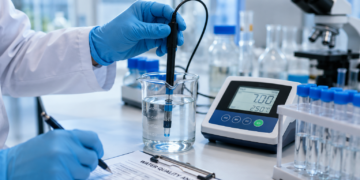




Wright State University chemistry graduate student Kwaku Nti Nyarko is developing an electrode sensor designed to quickly and inexpensively detect harmful heavy metals in drinking water. His research is inspired by water-quality problems he encountered in Ghana.
Nyarko, who is pursuing a master’s degree in chemistry, is using electrochemistry to develop a sensor that can detect heavy metals such as lead and cadmium. The project uses nanoparticles synthesized from household ingredients including honey, pomegranate, turmeric and ginger. The nanoparticles are made into a paste used to coat the electrode.
Suzanne Lunsford, professor of chemistry, said the approach is called the “green method” because the ingredients are not toxic. The coated electrode is intended to measure heavy metal levels and show whether water is safe to drink. Nyarko is also working toward coating electrodes with material that could remove heavy-metal ions through a process called chelating.
Nyarko previously worked as an industrial quality control officer in Ghana. He said attending the funeral of a friend who died in a mining accident strengthened his desire to address water contamination after he saw newborn babies with birth defects in the village. He arrived at Wright State in January 2025.
His work has also expanded into education. Nyarko and Lunsford developed a hands-on chemistry lab where high school students tested water quality using advanced instruments while learning about STEM. The project received a nearly $50,000 award from the Ohio Environmental Protection Agency.
Nyarko also serves as a teaching assistant and volunteers in outreach activities. He credited Wright State’s chemistry department with providing the resources and support needed to advance his research, saying the university “truly feels like home to me.”
Source: Wright State Newsroom, Thirsting for life, August 6, 2026.