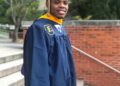




Lordrick Kahinga’s path from Tanzania to doctoral research in astronomy at the University of California, Santa Cruz, began with a YouTube lecture and developed into hands-on scientific training at Lick Observatory.
Kahinga, who majored in physics as an undergraduate, became interested in the cosmic phenomenon Lyman-alpha after watching a lecture by UC Santa Cruz professor J. Xavier Prochaska. He contacted Prochaska and met with him over Zoom. Prochaska later invited Kahinga to UC Santa Cruz to pursue a Ph.D.
Kahinga is now entering his fourth year as an astronomy and astrophysics Ph.D. student. His research focuses on fast radio bursts, sudden flashes of radio waves that last only a few milliseconds and can be extraordinarily bright.
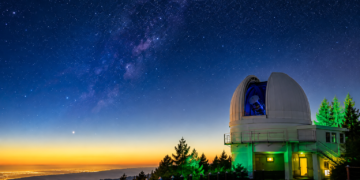
His training at Lick Observatory has given him opportunities to conduct research under real observing conditions. Graduate students at the observatory operate scientific instruments, test new technologies and conduct independent research. For Kahinga, the experience has also involved learning to make critical decisions, solve problems under pressure and take responsibility for an observing program.
“At Lick Observatory, I found confidence in myself as an astronomer,” Kahinga said. He described the observatory as a place where students, professional astronomers, teachers and public mentors can encounter astronomy directly.
Kahinga said observations at Lick have made astronomy feel more physical and real than the remote observations he previously conducted in Tanzania. He also emphasized the observatory’s role in research, education, instrument testing and the training of instrumentation scientists.
His story is featured as the University of California marks Lick Observatory’s 150th anniversary, highlighting the role hands-on access has played in his development as an astronomer.
Source: UC Santa Cruz News, “A student’s trajectory from Tanzania and transformation into a scientist,” August 20, 2026.